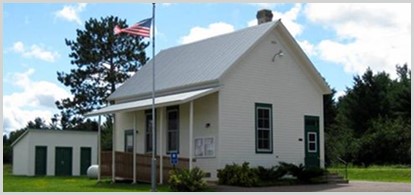
Planning Commision
Plan Commission Mtg. Agenda-June 7, 2026
Town of Washburn
Plan Commission Meeting
Date &Time: Sunday, June 7, 2026, 7:00 P.M
Location: Town Hall
Agenda
1. Call meeting to order and verify legal notification.
2. Approve minutes of meeting of May 5, 2026 (Defoe driveway extension).
3. Review public comment drafts of the county sanitary, floodplain and land division ordinances. Make recommendations to Town Board. Two drafts are posted at this link: https://hkgi.konveio.com/bayfield-county-zoning-ordinance-rewrite and one more is scheduled to be available on June 5th.
4. Set date and time for next meeting. Propose: Tuesday, July 7, 2026, 7:00 P.M. (review draft county shoreland/wetland, nonmetallic mining, and zoning ordinances).
5. Announcements
6. Adjournment.
Posted by:
Kenneth Bro, chair
Washburn Town Plan Commission
plan@townofwashburn.wi.gov
Agenda-Plan Commission Meeting May 5, 2026
Town of Washburn
Plan Commission Meeting
Date &Time: Tuesday, May 5, 2026, 7:00 P.M*.
Location: Outdoors at 74399 Ondossagon Road
Agenda
1. Call meeting to order and verify legal notification.
2. Approve minutes of meeting of November 2, 2025 (Sirrine driveway).
3. Review driveway permit application for Tracy Defoe to extend a driveway to a proposed residence on her 20-acre parcel in an Agriculture 1 zoning district (S½N½NE¼SE¼ + S½N½NW¼SE¼ Section 10 T.48N R.5W; Tax ID #38474 + #38476).
4. Discuss the review of public comment drafts of the county ordinances.
5. Action on draft brochure on Town history.
6. Set date and time for next meeting. Propose: Tuesday, June 2, 2026, 7:00 P.M. if there is business to conduct (review draft county ordinances).
7. Announcements
a. Pedestrian/bicyclist safety: road signs to be installed this spring.
b. Committee on preserving/promoting “Dark Skies” is meeting.
8. Adjournment.
* Commission members will conduct a site visit at 6:30pm and meet immediately afterward.
Posted by:
Kenneth Bro, chair
Washburn Town Plan Commission
plan@townofwashburn.wi.gov
October Plan Commission Meeting Agenda
Town of Washburn
Plan Commission Meeting
Date &Time: Tuesday, October 7, 2025, 6:30 P.M.*
Location: Town Hall
Agenda
- Call meeting to order and verify legal notification.
- Approve minutes of meeting of September 2, 2025
- Review driveway permit application for Norman & Susan Cessna on their 15-acre parcel 150 feet SE of intersection of Scholl Rd & McKinley Rd (in N½ NW¼SW¼ Section 36 T.49N R.5W; Tax ID# 39324).
- Develop recommendations for making town roads safer for pedestrians and bicyclists.
- Set date and time for next meeting. Propose: Tuesday, November 4, 2025, 7:00 P.M. if there is business to conduct.
- Announcements
- Adjournment.
* Commission members will conduct a site visit at 6:00pm prior to the meeting.
Posted by:
Kenneth Bro, chair
Washburn Town Plan Commission
plan@townofwashburn.wi.gov
Plan Commission Minutes April 7, 2025
Plan Commission Minutes
Town of Washburn
Town Hall
Tuesday, April 7, 2025
Commission members present: Kim Bro (chair), Jim Park (town board representative), Tim Schwenzfeier
(vice chair), Caroline Twombly.
Commission members absent: Cyndi Belanger (secretary) due to illness.
Others present (at site visit): Mike Harvey (town road superintendent), Bridget Tetzner (permit applicant),
Scottie Sandstrom (town board supervisor).
1. Chairman Bro called the meeting of the commission to order at 7:15 P.M. and verified its legal
notification (posted on town website and at town hall and Tetzner Dairy) on April 5, 2025.
2. The minutes of the March 6, 2025 meeting were approved (Timi moves, Caroline seconds).
3. Prior to the meeting at 6:30 P.M., the commission conducted a site visit with Bridget Tetzner at her
property (adjacent to 30650 Sky Rd). Bridget, her contractor Tim Schwenzfeier, and the surveyor had
marked property lines, the perimeter of her proposed driveway with a tee turnaround south of a proposed
garage and east of the proposed house. The proposed buildings are on a slope of a former glacial beach
over a silty clay confining layer (a steep transitional soil area), and seeps were visible in the area of the
proposed driveway. The proposed garage is adjacent to a gully descending from the upper landscape. The
contractor proposed to install swales to divert runoff and seepage from building to a proposed ditch on
the north side of the driveway to an existing ditch on the north side of the driveway shared with the
adjoining neighbor. The contractor will use sand from the construction site to build a road base at least
one foot above the existing ground level before installing the required gravel road bed. If building
footings intercept the underlying confining layer for soil groundwater flow, then drain tiles will be
installed at the footings to divert seepage away from the buildings.
4. The commission reviewed the driveway permit application and preliminary development plan for Bridget
and Forest Mann on their 10-acre parcel in a Agriculture-1 zoning district (SW¼NE¼ Section 12 T.46N
R.5W; Tax ID #31299, #31295 & #31301). The proposed driveway extends from an existing driveway
used by an adjacent neighbor. The owner proposes building the driveway base at least one foot with sand
from the construction site prior to adding a 6” base of 2-minus gravel that will be compacted as
construction occurs. The marked layout of the driveway and Tee-turnaround provides adequate access for
emergency vehicles.
With these planned measure to manage runoff and seeps, the commission recommends (Caroline moves,
Jim seconds, Tim abstains) that the town board approve the driveway permit. The setback of the entire
site retains the forested character of the area (Objective 8.3). The proposed swales around the buildings
are expected to prevent slumping of the steep transitional soils (Objective 8.3). The addition of sand
above the existing ground level should accommodate the drainage, visibility, and roadbed requirements
of the Town Driveway Ordinance.
5. The commission reviewed a “permissible uses” table that the County Planning and Zoning Committee
asked town boards to review relative to the Town’s Future Land Use Plan in the Town Comprehensive
Plan. The Commission felt that, rather than reviewing the requirements for dozens of potential uses, The
Town Board should emphasize the need for the county and towns to collaborate in developing a more
effective review process. Key issues are developing a performance-based zoning system, such as the state
certified Prime Farmland Zoning ordinance provisions to retain large blocks of farm and forests. Also, a
key need is to establish better control of development of steep slopes in order to avoid exacerbating
erosion and slumping from inappropriate development on slopes. Kim will prepare, for Town Board
review, the table using current review process and write a cover memo emphasizing the larger issues.
6. On April 10, Kim will participate in a “stakeholder group” advising the County on rewriting the zoning
ordinance.
7. The next meeting will be Tuesday, May 6 if there is business to be conducted.
8. The meeting adjourned at 8:45 P.M. (Caroline moves, Tim seconds).
Draft submitted by: Kenneth Bro, Chair, Town of Washburn Plan Commission (April 8, 2025).
‘
Plan Commission Report
The commission recommends that the town board approve the driveway permit for Bridget and Forest Mann
contingent on 1) installing swales to divert seeps and drain tiles wherever a confining level is exposed, and
2) building the driveway road base above the native wet soils on the property.
The commission recommends that the town board respond to the County Planning & Zoning Committee
request on “permissible uses” with comments on the major land use issues identified in the updated Town
Comprehensive Plan.
Notice of Adoption of a Resolution and an Ordinance – Adoption of Updated Comprehensive Plan 2025-2045
NOTICE OF ADOPTION OF A RESOLUTION AND AN ORDINANCE
Town of Washburn, Bayfield County, Wisconsin
2025 Adoption of updated Town of Washburn Comprehensive Plan 2025‑2045
Providing information on the Town’s authority and procedures for adopting a comprehensive plan pursuant to §66.1001 (4), Wisconsin Statutes.
Pursuant to §60.80, Wisconsin Statutes, the Town of Washburn, Bayfield County, Wisconsin, hereby posts notice that, at its regular Town Plan Commission meeting held on March 6, 2025, the Commission adopted a resolution recommending Town Board adoption of the updated Town of Washburn Comprehensive Plan 2025‑2045, and, at its regular Town Board Meeting held on March 11, 2025, the Town Board enacted an Ordinance #2025‑1 adopting the updated comprehensive plan.
SUMMARY OF ORDINANCE
The ordinance identifies all the statutory procedures, requirements, and authority to adopt a comprehensive plan. The plan provides data analyses, long-term projections, and recommendations for Housing; Economic Development; Transportation; Utilities & Community Facilities; Agricultural, Natural & Cultural Resources; Land Use; Intergovernmental Cooperation pursuant to §66.1001 (4), Wisconsin Statutes.
Location of Full Ordinance: The full text of the resolution and the ordinance is on the town’s website and may be found in the updated Town of Washburn Comprehensive Plan 2025‑2045 available at the Washburn Public Library, 307 Washington Ave., Washburn, WI 54891 during normal hours, or online at https://townofwashburn.wi.gov/forms-permits.
Plan Commission and Town Board Public Hearing and Meeting Agenda – March 6 2025 7:00 pm
Town of Washburn
Plan Commission and Town Board Public Hearing and Meeting
Date &Time: Thursday, March 6, 2025, 7:00 P.M.
Location: Town Hall*
Note: Town Board members will be present but will not hold a meeting.
Public Hearing on Updated Draft Comprehensive Plan
- A brief presentation of the updated plan.
- Acceptance of public comments on the draft plan.
- Adjourn the public hearing.
Plan Commission & Update Task Force Agenda
- Call meeting to order and verify its legal notification.
- Approve minutes of meeting of February 4, 2025.
- Eleventh meeting of Comprehensive Plan Update Task Force.
Review public comments and edits/corrections to the draft plan.
- Consider a resolution to recommend Town Board adoption of the updated comprehensive plan for 2025‑2045
- Set date & time for next meeting (propose either Monday March 10, 2025, 7:00 P.M. prior to the Town Board meeting on Tuesday, March 11, 2025 or Monday, April 14, 2025, 7:00 P.M.).
- Consider an additional meeting on Monday, March 10, 2025, 7:00 P.M. if needed to recommend a final edition of the plan.
- Other announcements
- Adjournment
Submitted by:
Kenneth Bro, chair
Washburn Town Plan Commission
E-mail: plan@townofwashburn.wi.gov
Plan Commission Agenda Tuesday February 4, 2025 7:00 pm
Town of Washburn
Plan Commission Meeting
Date &Time: Tuesday, February 4, 2025, 7:00 P.M.
Location: Town Hall*
Agenda
- Call meeting to order and verify its legal notification.
- Approve minutes of meeting of January 28, 2025.
- Tenth meeting of Comprehensive Plan Update Task Force.
Review the public comment draft of the plan.
● Prepare a list of key findings & recommendations for each section.
● Plan a brief community presentation for the beginning of the public hearing.
● Discuss any final improvements before recommending adoption. - Next meeting is Thursday, March 6, 2025, 7:00 P.M. (public hearing).
- Consider an additional meeting on Monday, March 10, 2025, 7:00 P.M. if needed to recommend a final edition of the plan.
- The Town Board meeting is Tuesday, March 11, 2025
- Other announcements
- Adjournment
Submitted by:
Kenneth Bro, chair
Washburn Town Plan Commission
E-mail: plan@townofwashburn.wi.gov
* Video conference access is available via GoogleMeet: meet.google.com/cab-puob-kbu
or by phone (US) +1 413-338-0736 PIN: 490 796 790#
Minutes – Jan. 28, 2025
Plan Commission & Task Force Minutes
Town of Washburn
Town Hall
Tuesday, January 28, 2025
Commission members present: Cyndi Belanger (secretary), Kim Bro (chair), Jim Park (town board representative), Tim Schwenzfeier (vice chair), Caroline Twombly (online videoconference).
Commission members absent: none.
Planning Task Force members present: Terri Bahe, Tom Cogger, Dennis Weibel.
Planning Task Force members absent: Phil Kraus, Ryan Padrutt, Alex Prediger, Charmaine Swan.
Others present: Northwest Regional Planning Commission consultant Emily Nelson attended online.
-
Chairman Bro called the meeting of the commission to order at 7:06 P.M. and verified its legal notification (posted on town website and at town hall and Tetzner Dairy on Jaanuary 23).
-
The minutes of the January 7, 2025 meeting were approved (Tim moves, Cyndi seconds).
-
The group summarized the recommended revisions of online maps:
● Map1_RecreationalResources-print.pdf: Terri will marked numbers for historic/cultural sites and sent
them to Clem.
● Map3_PASER-print.pdf: Caroline said that she does not think the state PASER road condition map
is useful in the plan because so easily becomes out of date. Because there is not an online version of
the map that the public can view, it is not possible to put a link in the plan. Noting the town’s online
road maintenance plan may be more useful, and it would be helpful to have community members who
could assist the town’s Road Superintendent with updating the PASER database more often.
● Map7_ExistingLandUse-print.pdf: Kim and Terri recommend that forested parcels greater than 5 acres
with a residence be “Forest” rather than “Residential.” Also, Potters Farm, a nonprofit retreat center
should be “Institutional,” not “Residential.”
● Map8_FutureLandUse-print.pdf: Kim and Terri recommend that land currently used as “Agriculture”
remain as “Agriculture.” They recommend against converting forest to agricultural use. They
recommend that areas that con be converted from “Forest” to “Rural Residential” be in areas next to
paved roads on the far east side of the town including areas near Engoe, Nevers, and Wannebo roads
east of Bjork Road, areas on the south side of County Hwy C east of Arenson Road, and an area south
of Gasperini Road and west of Big Rock Road. They also recommend that the industrial forest land in
the town be identified as “Conservation” because we recommend that the headwaters of the town’s
Class 1 trout streams should remain as forest and not be developed. They recommend that the area
identified as “Steep Slopes and Floodplains” or as “Sensitive Areas” be treated as a “Conservation”
overlay where lands should not be further subdivided or developed. These slopes can be dangerously
disturbed by development that would cause severe sedimentation of the trout streams.
● Map9_FutureLandUseOverlay-print.pdf: See notes for Map8.
● Map10_Zoning-print.pdf: The large area of land in an “Agriculture” district on the zoning map
indicates how many former farms in the town have reverted to forest when farming stopped.
● “Groundwater Table” map: Clem produced a map of the groundwater table elevation to replace the
“Depth to Groundwater” map in the “Natural Resources” section text.. -
The chapter subgroups summarized their progress in revising and updating the plan chapters:
● Cyndi has added information to the “Community Resources” section regarding services for the elderly.
The group discussed whether the town should have any plan objectives related to monitoring elderly
shut-ins. The population of residents older than 74 years old is projected to increase by 6% from 97 in
2020 to approximately 130 in 2050. Cyndi said that monitoring the elderly is a county function.● We discussed the challenges of revising what were “policies” in the 2007 plan to definable action steps
in the “Implementation” chapter. Members will work on this process, which requires their thinking
about how to word things. Jim mentioned that the Town Board currently has a largely full plate of
things to do at its monthly meetings. We need to be judicious about how many actions are assigned to
the Town Board. Here are definitions of the terms in the “Implementation” chapter tables :
Goals: Broad, value-based statements describing a condition that we hope to see in the town in the
long term (20 years or more). Goals specifically address key issues, opportunities, and
problems described in the chapter narrative.
Objectives: Statements of the specific changes that will occur in the town toward achieving a
goal. Objectives should be measurable, achievable within the timeframe, and relate directly
to the objective.
Actions: A stepwise set of activities that lead toward achieving an objective. Because each action
needs to occur in a specific timeframe, it should have a date of completion and not be
“ongoing,” and those responsible for taking the step should be identified in the
“Implementation” table
● Emily gave the members a few more days to revise the chapters in GoogleDocs. They need to be
completed by Sunday night February 2nd so that Emily compile the Public Comment Draft starting the
following Monday morning can bring a hard copy for the Washburn Public Library and a PDF copy
for the town website on February 4th. - Kim said the Ashland Daily Press notice of the March 6th a public hearing should appear in this week’s newspaper.
- The next meeting will be Tuesday, February 4, 2025 at 7:00 P.M. at the town hall. To review the draft plan and to plan our presentation.
-
The meeting adjourned at 9:05 P.M. (Cyndi moves, Tim seconds).
Draft submitted by: Kenneth Bro, Chair, Town of Washburn Plan Commission (February 4, 2025).
Plan Commission Report
There are no Town Board actions required at this time.
Plan Commission Meeting Agenda Tuesday January 28, 2025 7:00 pm
Town of Washburn
Plan Commission Meeting
Date &Time: Tuesday, January 28, 2025, 7:00 P.M.
Location: Town Hall*
Agenda
- Call meeting to order and verify its legal notification.
- Approve minutes of meeting of January 7, 2025.
- Ninth meeting of Comprehensive Plan Update Task Force.
● Complete updated drafts of plan elements. Please review prior to meeting. Chapter editors
summarize changes made.
● Complete action steps for each element in “Implementation” chapter table. Assure
“actions” are specific steps in a timetable, not “ongoing.”
● Assure that maps are ready for printing.
● Assure that Emily has the final draft for public review.
- Next meeting is Tuesday, February 4, 2025, 7:00 P.M. (public release of draft plan).
- Other announcements
- Adjournment.
Submitted by:
Kenneth Bro, chair
Washburn Town Plan Commission
E-mail: plan@townofwashburn.wi.gov
* Video conference access is available via GoogleMeet: meet.google.com/jei-nwpq-djd or
by phone (US) +1 814-713-2295 PIN: 412 393 410#
Minutes – Jan. 7, 2025
Plan Commission & Task Force Minutes
Town of Washburn
Town Hall
Tuesday, January 7, 2025
Commission members present: Cyndi Belanger (secretary), Kim Bro (chair), Jim Park (town board representative), Tim Schwenzfeier (vice chair), Caroline Twombly.
Commission members absent: none.
Planning Task Force members present: Terri Bahe, Tom Cogger, Phil Kraus, Dennis Weibel.
Planning Task Force members absent: Ryan Padrutt, Alex Prediger, Charmaine Swan.
Others present: Northwest Regional Planning Commission consultants Clem Larson (mapping), Emily Nelson (planning) attended online.
-
Chairman Bro called the meeting of the commission to order at 7:00 P.M. and verified its legal notification (posted on town website and at town hall and Tetzner Dairy on Jaanuary 4).
-
The minutes of the December 3, 2024 meeting were approved (Tim moves, Cyndi seconds).
-
Clem has posted links at NWRPC to maps he has produced:
● Map1_RecreationalResources-print.pdf: Terri will mark numbers for historic/cultural sites. Kim will
scan Terri’s mark-up and send it to Clem.
● Map2_TransportationSystem-print.pdf:: This looks good.
● Map3_PASER-print.pdf: Caroline said that she thinks the state PASER road condition map may not be
up to date. For example, the condition of Church Corner Road pavement seems worse than the
PASER system indicates. We need to check whether the system can be updated before the final
map is included in the plan.
● Map4_PrimeFarmland-print.pdf: This looks good.
● Map5_Topography-print.pdf: This looks good.
● Map6_Soils-print.pdf: This is a map of general categories, as with the previous plan.
● Map7_ExistingLandUse-print.pdf: We need to double check based on the land use categories that the
county wants all towns to use.
● Map8_FutureLandUse-print.pdf: We need to double check based on the land use categories that the
county wants all towns to use. Kim will send the definitions that the county wants towns to use.
● Map9_FutureLandUseOverlay-print.pdf: See notes for Map8.
● Map10_Zoning-print.pdf: This looks good.We also asked Clem to produce a “Natural Resources” map, a “Bicycle Routes” map showing the Washburn–Ondossagon Road Loop and the Moquah Barrens–Washburn Loop from the “Bicycle Map for Ashland and Bayfield Counties,” and the Town of Washburn portion of the “Groundwater Table” map on the Bayfield County Land Records website.
-
The chapter subgroups summarized their progress in revising and updating the plan chapters:
● Kim asked the subgroups to list goals and objectives in the chapters using the definitions he previously
distributed. The 2007 often listed action steps as objectives or subobjectives. The only place to show
action steps is in the tables in the “Implementation” chapter, which shows timing and those responsible
for taking action. An action step could be to recruit an ad hoc committee to lead implementation. The
Plan Commission and the Town Board likely cannot implement every action step in the plan. Preparers
of plans often confuse the differences between goals, objectives and actions. Here are the terms:
Goals: Broad, value-based statements describing a condition that we hope to see in the town in the
long term (20 years or more). Goals specifically address key issues, opportunities, and
problems described in the chapter narrative.
Objectives: Statements of the specific changes that will occur in the town toward achieving a
goal. Objectives should be measurable, achievable within the timeframe, and relate directly
to the objective.
Actions: A stepwise set of activities that lead toward achieving an objective. Because each action
needs to occur in a specific timeframe, it should have a date of completion and not be
“ongoing,” and those responsible for taking the step should be identified in the
“Implementation” table
● Issues and Opportunities: Kim describer four key issues that the plan should address:
1. Preserving rural character by reducing fragmentation of forests and farmlands.
2. Serving an increasingly older population and smaller household size.
3. Providing affordable housing and childcare as working families are recruited to replace retirees.
4. Increasing demand for opportunities to be close to nature.
The State of Wisconsin has prepared updated population projections. Emily will update the projections
in the chapter and add side-by-side age/sex projections for Bayfield County to show the increasing
proportion of elderly people expected in the future.
● Housing: Many of the actions in the 2007 plan can be trimmed. The focus will be on providing sites
for new houses that do not greatly increase fragmentation of larger parcels.
● Utilities and Community Facilities: This chapter has been updated, but there needs to be some
further editing to differentiate between existing, ongoing functions and planned changes. Action steps
need to be moved to the “Implementation” chapter.
● Transportation: This chapter has been updated, but action steps need to be moved to the
“Implementation” chapter. The PASER data is not up to date. Create an action timetable rather than
“ongoing” action steps.
● Economic Development: Many of the actions in the 2007 plan can be trimmed. Focus on development
specific to the town.
● Agricultural & Natural Resources: This section has been updated, but action steps need to be moved
to the “Implementation” chapter. Create an action timetable rather than “ongoing” action steps. Add an
objective for preventing future fragmentation of industrial forestlands.
● Cultural Resources: This section has been updated, but action steps need to be moved to the
“Implementation” chapter.
● Land Use: This chapter and map still needs revision. Some areas west of the Ondossagon Road north-
south line have become de facto rural residential areas. We need to propose a way to define them in the
“Future Land Use” map.
The draft plan needs to be completed no later than the January 28th meeting so that Emily can bring a hard copy for the Washburn Public Library and a PDF copy for the town website on February 4th.
- Kim shared a draft notice for the Ashland Daily Press of the March 6th a public hearing. It needs to be published at least thirty days prior to the hearing. The group approved publishing the notice.
- The next meeting will be Tuesday, January 28, 2025 at 7:00 P.M. at the town hall..
-
The meeting adjourned at 9:07 P.M. (Cyndi moves, Caroline seconds).
Draft submitted by: Kenneth Bro, Chair, Town of Washburn Plan Commission (January 16, 2025).
Plan Commission Report
The commission recommends that the town board attend the March 6th public hearing on the draft plan.